DIY vs Hiring a Handyman in Topeka — Know Before You Pick Up the Tools
Some repairs make sense to DIY. Others look simple but have failure modes that cost thousands. Here's how to tell which is which in Topeka's older housing stock.
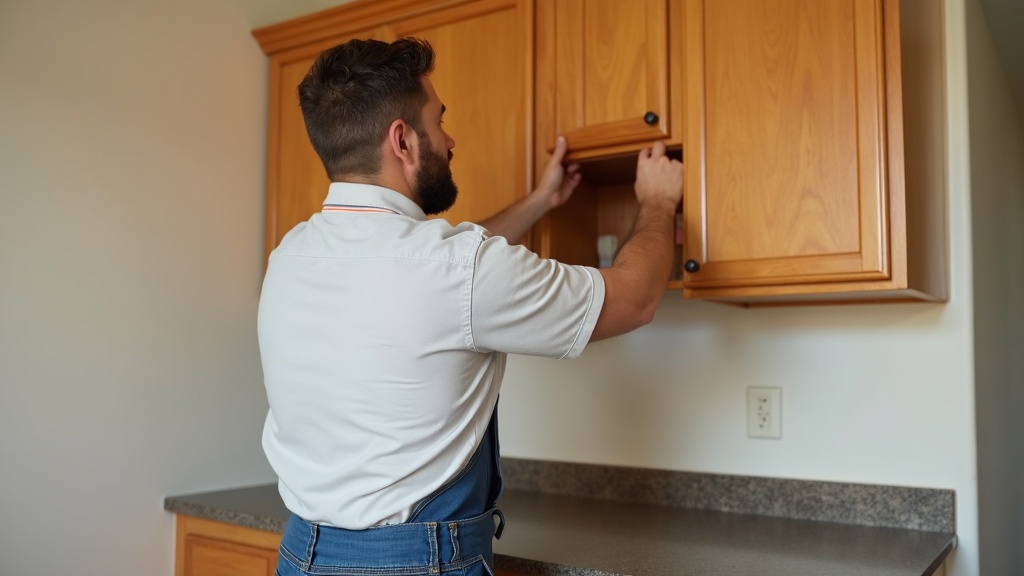
Every Topeka homeowner has stood in front of a broken cabinet, a cracked wall, or a dripping faucet and asked the same question: can I do this myself, or should I just call someone? The decision between DIY vs hiring a handyman in Topeka comes down to three things — your skill level, the actual complexity of the job, and what happens if something goes wrong. Get the analysis right and you save real money. Get it wrong and you pay twice: once for the failed attempt, and again to fix what you broke.
Jobs Topeka Homeowners Can DIY Safely
Painting interior rooms
Interior painting is one of the genuinely DIY-friendly jobs. The materials are forgiving, mistakes are correctable, and the skill ceiling is low. A patient homeowner who preps surfaces properly gets results that are hard to distinguish from a professional. The key word is patient. Rushing prep work is how you end up with peeling paint in six months.
Replacing door hardware
Swapping a doorknob, deadbolt, or handle set is straightforward with basic tools. The hole pattern on most residential doors is standard. If you're replacing with the same type of hardware, installation takes 20–30 minutes. Where it gets complicated: if the door isn't hanging square, new hardware won't fix the real problem.
Caulking and weatherstripping
This is one of the highest-ROI home maintenance tasks, and it's genuinely DIY-accessible. Removing old caulk, cleaning the joint, and applying new silicone caulk takes about an hour for a tub surround. These tasks save significantly on heating and cooling costs — especially relevant in Topeka where summer cooling and winter heating bills can be extreme.
Replacing outlet covers, switch plates, and light fixtures
Swapping a cover plate is a screwdriver job. Replacing a light fixture with an existing wiring box is also DIY territory — just cut power at the breaker first and verify it's off with a non-contact voltage tester before touching any wires. The rule: if you're swapping something that's already there with an identical replacement, it's usually DIY-safe.
Minor drywall patching (holes under 3 inches)
Small nail holes, anchor holes, and doorknob dings are DIY territory. Pre-mixed joint compound, a putty knife, sandpaper, and paint — that's the whole toolkit. Matching texture on smooth-finished walls is easy. Matching texture on older Topeka homes with knockdown or orange-peel texture is where DIY results get spotty.
Jobs That Always Need a Professional in Topeka
Anything behind the wall electrically
Replacing outlets and switches: DIY-accessible. Adding a new circuit, running wire to a new location, touching the panel, or doing any work in a pre-1950 Topeka home that might have knob-and-tube wiring: call a licensed electrician. Knob-and-tube wiring cannot be covered with insulation, cannot be extended with modern wire without proper splicing, and is an active fire risk when disturbed incorrectly. Many College Hill and North Topeka homes still have it.
Plumbing beyond fixture swaps
Replacing a faucet or toilet — handyman territory. Soldering copper pipe, replacing supply lines inside walls, or any work on the main shutoff or gas lines — licensed plumber territory. The galvanized supply pipes common in 1940s–1960s Topeka homes are often corroded internally. Disturbing them without knowing the condition of the rest of the system can cause failures downstream that you won't discover until a pipe bursts at 2 a.m.
Foundation work
Cracks in concrete block or poured-concrete foundation walls need evaluation before any patch work. Some cracks are cosmetic. Others — diagonal cracks, horizontal cracks in block walls, cracks with displacement — indicate active movement. Patching over an active crack with hydraulic cement looks like a fix but isn't one. Get an evaluation first.
Anything structural
Removing a wall, adding a window opening, repairing a sagging floor joist, replacing a rotted sill plate — all structural. Structural work done wrong doesn't fail immediately; it fails slowly, sometimes over years, and the failure mode is catastrophic.
The Hidden Costs of DIY Gone Wrong
The time cost. A handyman who fixes drywall regularly does a patch in 2–3 hours. A homeowner tackling it for the first time may spend an entire weekend. If you earn $30/hr at work and spend 8 hours on a repair a handyman would charge $240 to do, you haven't saved money.
The materials mistake cost. Wrong caulk for a bathroom (latex instead of silicone) fails within 6 months. Wrong paint sheen in a high-moisture area peels. Wrong anchor type for drywall pulls out. Every materials mistake means a return trip to the store, and often means starting over.
The escalation cost. A homeowner removes a rotten fence board and discovers the post is rotted too. Or they remove a light fixture and discover wiring that doesn't match any wiring diagram they can find (common in older Topeka homes where multiple owners have done their own work over 60 years). Each step into unknown territory on an old house risks turning a $200 repair into a $1,500 problem.
The code compliance cost. Non-permitted electrical or plumbing work shows up on home inspection reports when you sell. Buyers negotiate hard on anything unpermitted, and sometimes lenders won't close.
How to Evaluate Any Repair Before You Start
Ask yourself these four questions:
- Do I know exactly what I'll find when I open this up? If the answer is "I'm not sure," there's a meaningful risk of escalation. Opening walls, pulling fixtures, and disturbing old plumbing in a pre-1960 Topeka home often reveals surprises.
- What's the worst-case failure mode? A bad paint job is cosmetic. A bad electrical connection is a fire risk. Rank the failure severity before starting.
- Do I have the right tools — or will I buy them just for this job? Buying a $60 drywall texture sprayer for a single patch doesn't save money.
- What will I do if I get halfway through and it's more than I expected? If you don't have a clear answer — "I'll call a handyman to finish it" — you're not ready to start. Half-finished repairs cost more to fix than jobs that were never started.
Not sure which side your repair falls on?
Call 877-519-9702 — describe what you're seeing and get a straight answer on whether it's DIY territory or worth having a professional handle.
Frequently Asked Questions
Get a Free Estimate — No DIY Guesswork Needed
Describe your repair and we'll tell you exactly what it involves and what it'll cost. No obligation. Serving all of Topeka.